
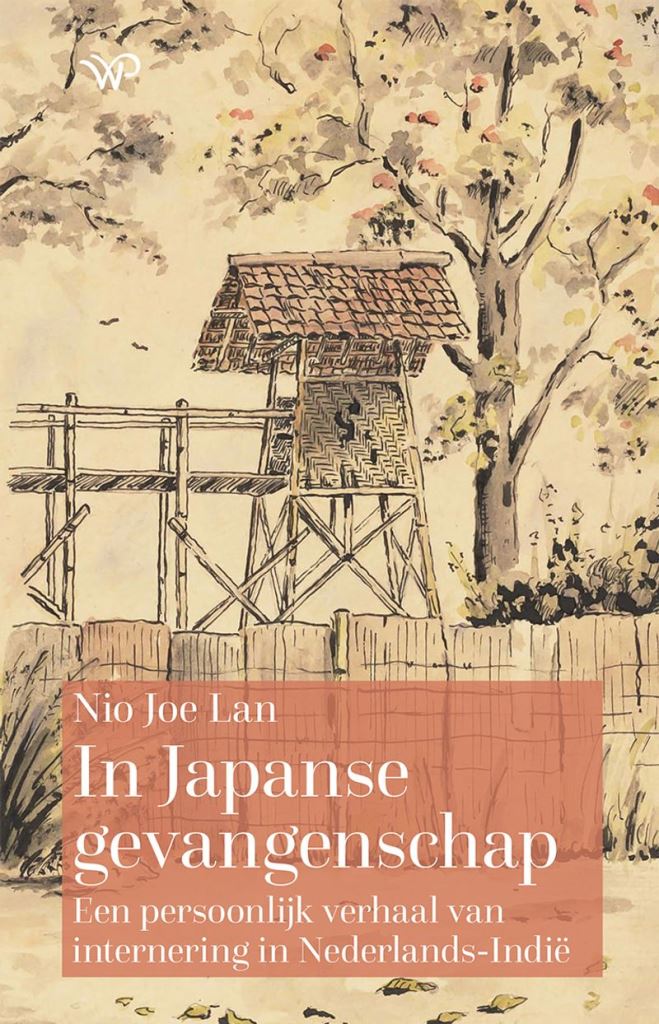
Tijdens de Japanse bezetting waren er ook interneringskampen voor de Chinezen. Net als over andere interneringskampen is er over geschreven. Een van de gepubliceerde boeken was van Nio Joe Lan.
Op 6 maart 2026 is de Nederlandse vertaling ‘In Japanse gevangenschap’ gepresenteerd tijdens een presentatie door Patricia Tjook-Liem (bekend van haar boek ‘Chinezen uit Indonesië’) bij het KITLV te Leiden. 1 2 3
Met Lee Man Fong als (enige?) uitzondering is er niets bekend over Malinostudenten die tijdens de Tweede Wereldoorlog in interneringskampen hebben gezeten. Veelal waren ze ook nog te jong om politiek actief te zijn. Van ‘westerse’ kinderen is natuurlijk bekend dat zij in kampen hebben gezeten, maar of dat voor latere Malinostudenten ook het geval was, is niet bekend. Wel kan het zijn dat ouders (van alle Malinostudenten; en niet alleen westerse of Chinese) in kampen hebben gezeten, maar ook dat is niet bekend.
Of Japanse interneringskampen nog een onderwerp zijn dat in het kader van Malinostudenten interessant is, kan nog niet worden bepaald. Wel is het boek van Nio Joe Lan aanleiding om daarop te letten.
Over Lee Man Fong wordt over zijn internering in het boek ‘The oil paintings of Lee Man-Fong’ het volgende vermeld: 4 5
In In 1942 Japanese forces invaded Southeast Asia and Dutch-held Singapore and Malaya fell under enemy hands. Under Japanese occupation, fervent patriotism and righteousness deeply stirred the young artist’s consciousness. Unable to do battle with the enemy directly, he resorted to underground activities in the Restoration Society of Fu-hsing she. Unfortunately he was discovered and imprisoned. Now he came to learn the bitterness of being behind iron bars.
Quite by chance his jailer was a graduate of the Tokyo college of Arts. When the two came to know each other, the guard would secretly bring him brush and paper so that Man-Fong could paint in prison. This guard was in charge of the Ikebana or flower arrangement in the commanding officer’s quarters’ and often went there to create flower arrangements before that officer. He sought to intercede for the young artist, and obtain his release. Later when the case came to trial at the court martial, however, the judge did not give much consideration to Man-Fong’s situation, but because the young man had already endured a half-year’s imprisonment without crime, ordered his immediate release, Life is so fragile but in this case Man-Fong’s was saved by his art. Man-Fong returned to rest in the shade of his garden, where the Japanese guard often came to visit and learn. Before the Japanese Surrender he was transferred but came to Man-Fong to leave his address in Japan.
- Boekpresentatie | In Japanse gevangenschap: Een persoonlijk verhaal van internering in Nederlands-Indië. KITLV, 6 maart 2026. https://www.kitlv.nl/event/lan/ ↩︎
- Nio Joe Lan (2026). In Japans gevangenschap: een persoonlijk verhaal van internering in Nederlands-Indië. Walburg Pers. https://www.walburgpers.nl/nl/author/672338/n-j-lan ↩︎
- Tjook-Liem, P. (2022). Chinezen uit Indonesië: de geschiedenis van een minderheid. Walburg Pers. https://www.walburgpers.nl/nl/book/9789462499867/chinezen-uit-indonesie ↩︎
- Lee, M.F. (2014). The oil paintings of Lee Man Fong : the pioneer artist of Indonesia and Singapore = Li Manfeng huaji. (Second edition). Art Book. p.13. ↩︎
- Zie mijn blog: Lee Man Fong 2014 boek – “Met een Malinobeurs naar Nederland” ↩︎
Geef een reactie